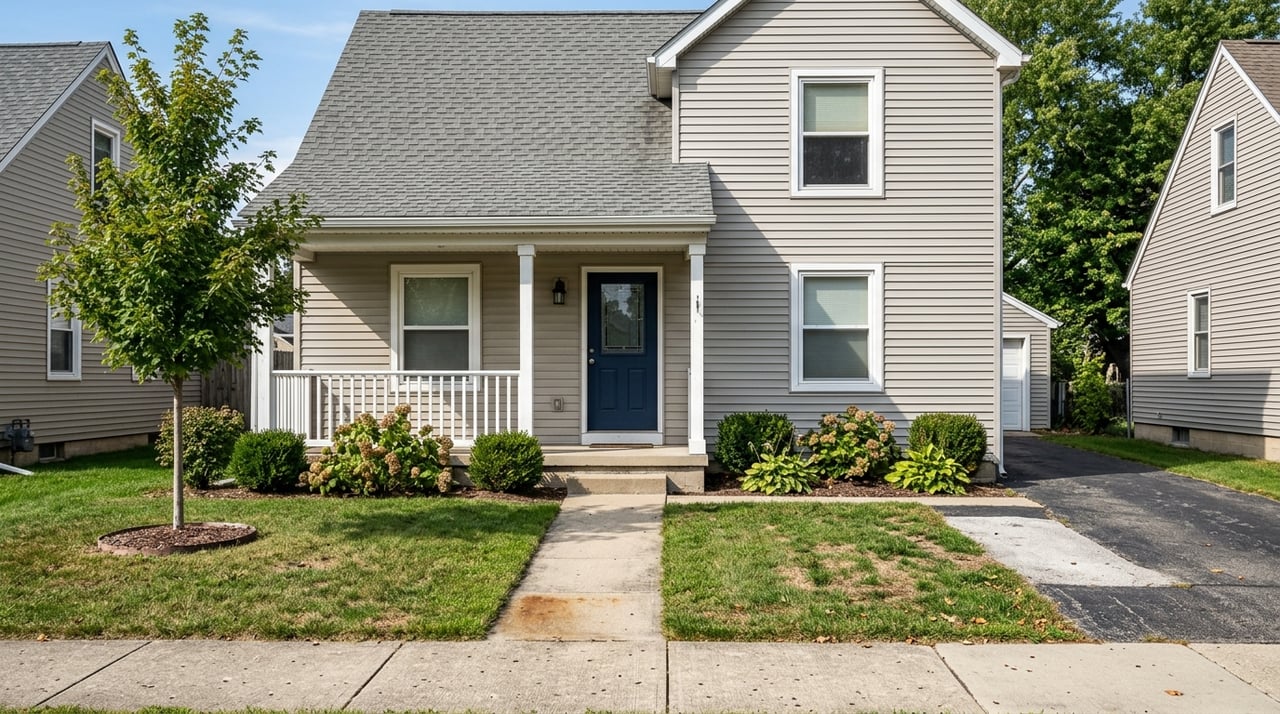
Moon Township Home Values by Neighborhood Explained
July 2, 2026
July 2, 2026
If you have ever looked at two homes in Moon Township and wondered why the prices feel worlds apart, you are not imagining it. Moon is not a one-price market, and township-wide averages only tell part of the story. If you are buying or selling here, understanding how values shift by neighborhood can help you set better expectations and make smarter decisions. Let’s dive in.
Moon Township has a strong housing base, with 10,616 housing units and 10,165 households. Census data shows a median owner-occupied home value of $293,000, and about 78.1% of homes are owner-occupied. That gives you a useful baseline, but it does not mean every part of Moon fits neatly around that number.
Current listing activity also shows a market that moves. Realtor.com's May 2026 snapshot reported 108 homes for sale, a median listing price of $391,950, a median 23 days on market, and a 100% sale-to-list ratio. Since these figures measure different things than census values, they work best as broad market context rather than a single answer for what any one home is worth.
Moon Township's own planning materials make it clear that neighborhood context matters. The township emphasizes development, redevelopment, connectivity, infrastructure, and community character, which means one address can sit in a very different setting from another, even within the same municipality.
In real terms, buyers and sellers are not comparing Moon as one big bucket. They are comparing homes based on neighborhood type, housing age, lot size, access, and whether a property faces special zoning or historic considerations. That is what creates different price bands across the township.
Mooncrest stands out as one of the clearest micro-markets in Moon Township. The neighborhood began in 1943 as war-production housing, and it became a local Historic District in 2005. Because of that historic status, some exterior work may require a Certificate of Appropriateness before permits are issued.
The township's Mooncrest market study also notes that the area is physically isolated from much of the rest of Moon by topography, limited transit, and a single point of access and egress. Homes there are generally smaller and more affordable than in other parts of the township. That often places Mooncrest in a different value tier than newer or less constrained neighborhoods.
Montour Run represents a very different housing pattern. According to the township's comprehensive plan, this eastern section includes a major concentration of residential development with predominantly large-lot single-family homes, relatively newer housing stock, and only a limited amount of multifamily housing.
Much of the housing here was built over the last 30 to 40 years. The area also includes significant vacant land with sewer, water, and vehicular access. In general, that combination tends to support stronger pricing, especially for homes with updated interiors, larger usable lots, and layouts that match current buyer preferences.
Thorn Run is more of an established central neighborhood pattern. The township describes it as having a large share of Moon's existing housing stock, with homes built over roughly a 50-year span and a wide variety of housing types.
Because there is very little vacant land and many long cul-de-sac streets, values here often become very location-specific. A home's condition, updates, lot utility, and exact street can matter more than the township average. In other words, pricing in Thorn Run is often decided block by block rather than by a simple neighborhood label.
Flaugherty Run has a mixed profile that can lead to wider pricing swings. Single-family homes are found along roads like Stoops Ferry Road, Foxwood Road, Becks Run Road, and the Spring Run Road extension, while multifamily areas are located closer to the University Boulevard corridor.
The township also notes that parts of this area have significant vacant land but more limited sewer, water, and vehicular access. That means exact location matters a lot. Two homes in the broader Flaugherty Run area may compete in very different price ranges depending on access, surrounding land use, and housing type.
Some Moon Township properties sit closer to major corridors or airport-related overlay areas. The township's plan treats the Airport Commerce area differently from residential neighborhoods because of continuous noise impacts, nighttime runway operations, and height restrictions tied to navigation and safety.
The zoning map also identifies areas such as the University Boulevard and Carnot Village overlay districts, along with a Mixed Use Educational Overlay District and an Airport Zone Overlay District. For you as a buyer or seller, that means corridor-adjacent properties may operate under different expectations than interior subdivision homes. Those differences can influence both demand and value.
Housing age is one of the biggest value drivers in Moon Township. The comprehensive plan says only 6.8% of the housing stock was built before 1940, while other neighborhoods were built much more recently. Single-family detached homes have historically dominated the township's housing mix.
That matters because buyers usually weigh older homes and newer homes differently. An older property may offer character and an established setting, while a newer home may attract attention for modern layouts and potentially less deferred maintenance. Neither is automatically better, but they often command different pricing.
Lot size alone does not tell the whole story. Moon's planning materials repeatedly connect neighborhood character and future development to infrastructure, traffic capacity, and road access.
A larger lot may add value, but so can a flatter site, easier utility service, or simpler driveway access. Two homes with similar square footage can sell at very different prices if one sits on a more usable parcel and the other has physical or service constraints.
Access is another major variable in Moon Township. The area's growth has long been tied to the airport and the Penn-Lincoln Parkway, and current planning materials emphasize important corridors like Thorn Run Road, Beaver Grade Road, University Boulevard, Route 51, and connections to Robert Morris University.
Homes with easier access to these routes may appeal to buyers who want convenient commuting. At the same time, homes closer to heavier traffic or airport operations may deal with more noise or land-use friction. That balance can push values up in one spot and cap them in another.
Not every Moon neighborhood attracts the same kind of buyer demand. The township's Mooncrest study describes that area as smaller, more affordable, and historically more rental-heavy, while the comprehensive plan notes the influence of Robert Morris University and the airport in other parts of the township.
This is a big reason Moon has multiple pricing tiers. A buyer looking for a historic district home, a buyer seeking a newer large-lot property, and a buyer focused on a corridor location may all be shopping in Moon Township, but they are not competing for the same exact product.
If you are selling in Moon Township, the most important step is choosing the right comparison set. The best comps are usually not every sale in Moon or even every sale in your ZIP code. They are the homes most similar to yours in neighborhood, age, lot size, access, condition, and any zoning or historic context.
That is especially important in a township with 14 neighborhoods and such varied development patterns. A broad median can be helpful for orientation, but buyers will judge your home against the most relevant alternatives. Accurate pricing starts with understanding the micro-market your property actually belongs to.
If you are buying in Moon Township, start with the idea that each area has its own price personality. Mooncrest may offer a different entry point than Montour Run. Thorn Run may require more street-level comparison, while University Boulevard and airport-influenced areas may need extra attention to access, overlays, and surrounding land uses.
This does not mean one area is better than another. It means your budget can go farther or shorter depending on the neighborhood context. The more clearly you define your priorities around home style, lot, commute, and setting, the easier it becomes to judge value with confidence.
Township-wide numbers are useful starting points, but they are not pricing tools by themselves. In Moon, neighborhood type, lot constraints, housing age, and corridor access can all shift a home's value well above or below the broader baseline.
That is why two homes in the same township can show very different pricing power. A precise home value in Moon Township comes from matching the property to its local context, not from relying on one headline number.
If you want a clearer picture of where your home fits in Moon Township's market, or you want help comparing neighborhoods before you buy, the LaRocca Real Estate Team can help you make sense of the details with a neighborhood-focused approach.
Stay up to date on the latest real estate trends.
Whether you're looking to buy, sell, or just want to chat about the exciting world of Pennsylvania real estate, let's start a conversation. Reach out to us today, and let's connect to explore the possibilities.