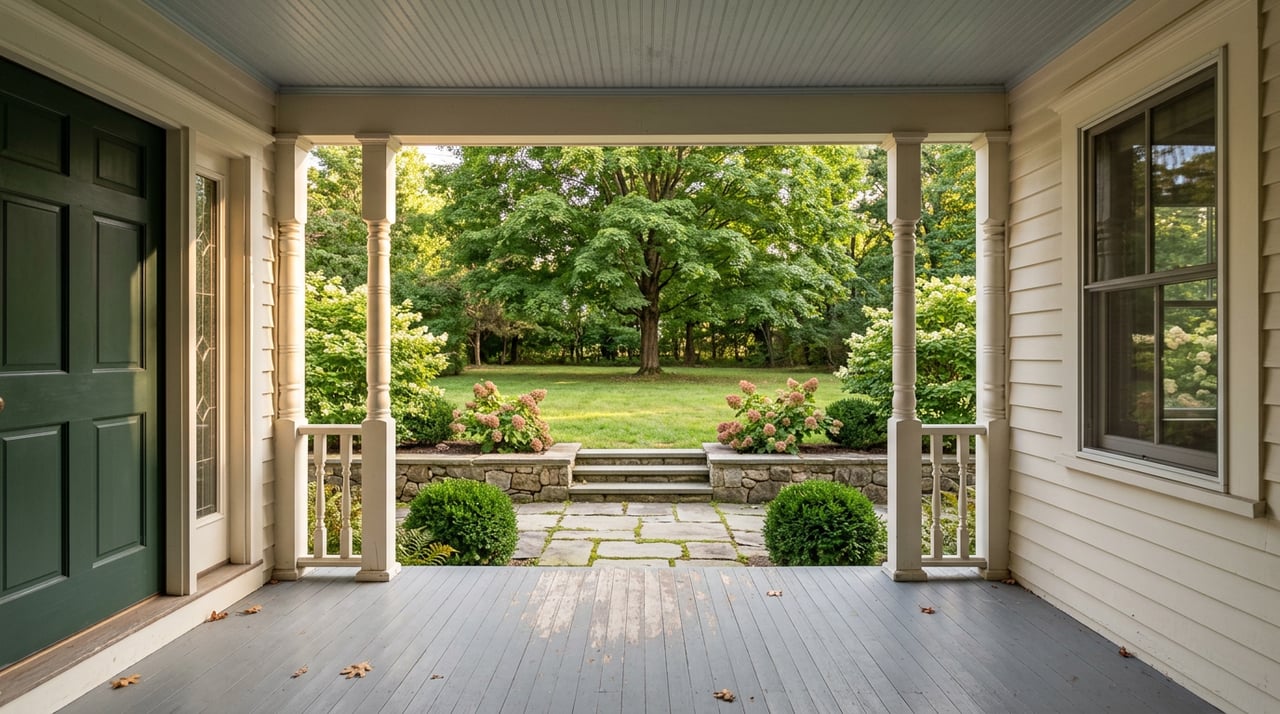
Sewickley Historic District Renovation Rules: What to Know
September 3, 2026
September 3, 2026
A three-story Gothic mansion sits on Broad Street in Sewickley, boarded up, its bell tower long gone, water damage working through the roof joists for the better part of three decades. Divine Redeemer Parish, which has owned the building since buying it from the Herbst family in the early 1900s, wants to tear it down. The parish says it can't afford the roughly $3.7 million a full restoration would take, and that it runs a weekly deficit of $12,000. It has asked to demolish the building. Twice, the borough has said no. The Sewickley Historic Review Commission voted unanimously against demolition. Sewickley Council backed that recommendation 6-0. The diocese appealed to Allegheny County court, arguing it was denied a fair hearing. A judge sent the case back for more testimony. As of early 2026, the fight is still not resolved.
The Herbst House case illustrates how Sewickley's historic-district review process applies to demolition requests. The building is within one of Sewickley's three historic districts, where exterior work visible from a public street is subject to review. If you're buying or selling a home in one of those districts, the ordinance also applies to exterior work visible from a public street such as gutters, siding, and porch railings. A historic-district designation therefore involves a review process for planned work.
Sewickley has three locally designated historic districts, and exterior work visible from a public street, from a new roof to a repainted door to an added dormer, needs to go through the borough's Historic Review Commission before a building permit can be issued. The standard the commission applies is the Secretary of the Interior's Standards for Rehabilitation, a federal preservation framework the borough has folded into its own Chapter 198 ordinance.
The process has a specific shape. The HRC is a five-member volunteer commission that includes a registered architect, a real estate broker, and a building inspector, and it meets the first Monday of each month. An application for exterior work costs $50 to file and must be submitted at least ten days before the meeting you want on the agenda, no exceptions. The commission then has up to 45 days to make a recommendation to Council, which holds the actual approval authority and meets on the second Tuesday of the month. Only after Council issues a Certificate of Appropriateness can the borough issue a building permit.
Stack those two calendars against each other and a homeowner who wants a new roof approved and permitted in the same month they discover a leak is almost always out of luck. The borough's own guidance encourages owners, architects, and contractors to attend an HRC meeting during the design phase, before submitting anything formal.
Here's the part that doesn't show up in older guides to Sewickley real estate. In March 2026, the borough issued a request for proposals to hire a consulting firm to write Sewickley's first comprehensive Design Guidelines and Preservation Manual for its historic districts. Proposals were due April 29, 2026. The scope is detailed: the manual is meant to cover masonry and siding repair standards, window and door replacement rules, roof and gutter guidance, and porch and railing reconstruction standards, organized by character area and building type across the three districts. The borough pointed prospective consultants toward comparable manuals already in place in Beaver and Mt. Lebanon as a model for scope and format.
The specific, written, illustrated standards for replacement windows, porch railings, and other work are still in development. Applications today are judged against the general language of the ordinance and the federal Secretary of the Interior standards. Once adopted, the new manual may provide more specific standards for future applications. If you're closing on a historic-district property now with renovation plans for next year, ask the borough about the current review process and the manual's status.
Historic-district review and closing costs are separate considerations for buyers and sellers. Sewickley Borough's transfer tax is a closing-cost item. Pennsylvania's Real Estate Seller Disclosure Law separately requires sellers to disclose known material defects, including roof condition, water intrusion, and past additions or remodeling, none of which the historic district rules exempt a seller from.
For a buyer considering an older home on Bank Street, Broad Street, Thorn Street, or another block inside a district boundary, the transfer tax is one closing-cost item, and borough review schedules may affect the timing of exterior renovations. Both are worth considering before making an offer.
Sewickley's historic districts aren't a single ring around the village center. The borough's ordinance describes district boundaries running along parts of Bank Street, Walnut Street, Rose Alley, Little Street, Henry Avenue, Emery Street, Elwick Street, Frederick Avenue, Broad Street, Thorn Street, and Ferry Street, with specific parcels named block by block. The Herbst House sits in what the borough refers to internally as Historic District #3, and a property one street over may fall in a different district or outside the boundary entirely.
That distinction matters because it isn't always visible from the curb. Two homes of similar age and style, a block apart, can carry different review obligations depending on which side of a district line they sit on. Before you get attached to a listing, it's worth confirming with the borough which district, if any, the parcel falls into, rather than assuming based on the general look of the block.
A few questions are worth asking before you're under contract on an older Sewickley home, especially one where you're already picturing exterior changes:
Does buying a home in a Sewickley historic district mean I can't ever change it? No. The ordinance governs exterior work visible from a public street, not interior renovation, and plenty of exterior projects get approved. The process can affect timing, but it is not an outright ban.
Who has the final say, the Historic Review Commission or Borough Council? The HRC is a recommending body. Borough Council holds actual approval authority and issues the Certificate of Appropriateness after considering the commission's recommendation.
Will the new Design Guidelines Manual make approval easier or harder? It's designed to make the standard clearer, not necessarily looser. A written, illustrated manual should reduce ambiguity for straightforward projects, but it also means commissioners will have a more specific document to measure against once it's adopted.
If you're weighing a purchase in one of Sewickley's historic districts, or trying to figure out what your own historic-district property is actually worth given these review requirements, the LaRocca Real Estate Team can walk through the specific parcel, its district status, and what a realistic renovation timeline looks like before you write an offer. Get Your Complimentary Home Valuation to start that conversation.
This article is general information, not legal, tax or financial advice. Consult a qualified professional about your situation.
Stay up to date on the latest real estate trends.
Whether you're looking to buy, sell, or just want to chat about the exciting world of Pennsylvania real estate, let's start a conversation. Reach out to us today, and let's connect to explore the possibilities.