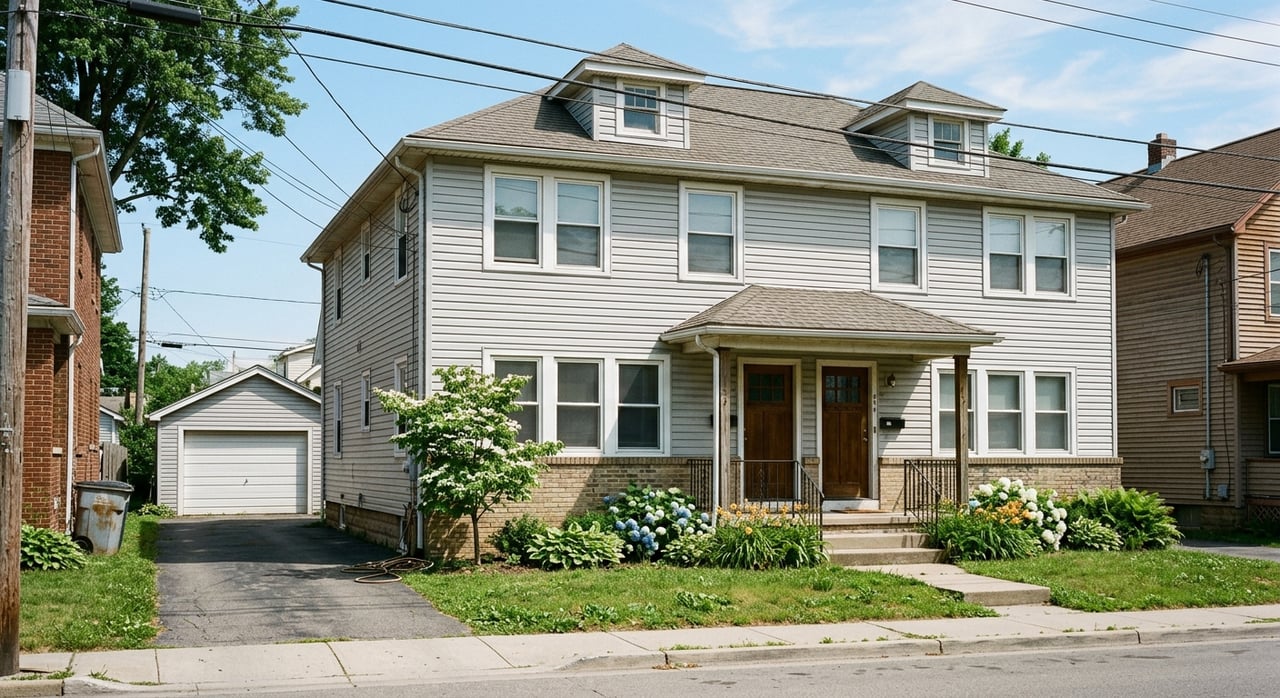
House Hacking Near Pittsburgh Airport in Coraopolis & Hopewell
April 23, 2026
April 23, 2026
If you want to live near Pittsburgh International Airport and offset your housing costs, Coraopolis and Hopewell Township deserve a close look. Both areas sit in the airport orbit, but they offer very different house-hacking paths depending on the kind of property and setup you want. If you are trying to balance price, rental income, zoning rules, and long-term flexibility, this guide will help you compare the two and spot the details that matter before you make an offer. Let’s dive in.
For many buyers, being near the airport is about more than catching flights. It can also mean access to a major employment hub, commuter convenience, and steady rental demand from people who want to stay close to western Pittsburgh job centers.
According to Visit Pittsburgh’s airport area overview, Pittsburgh International Airport is tied closely to the Moon and Coraopolis area. Hopewell Township also connects itself to airport-area growth through its planning framework around the aerotropolis concept, which highlights development activity near Route 60.
That shared airport connection is important, but the housing formats are not the same. In practice, Coraopolis tends to be the better fit for denser, more conversion-friendly house hacks, while Hopewell Township usually fits buyers who want a more suburban property with carefully verified multi-unit potential.
House hacking simply means buying a home and using part of it to generate income while you live there. That could mean purchasing a duplex, converting part of a house into a legal apartment, living above a commercial space, or buying a property with a rentable secondary unit.
In Coraopolis, the local zoning code creates a clearer path for small multifamily and conversion-style opportunities. In Hopewell Township, the opportunity is often more dependent on the exact zoning district, lot setup, and parking capacity.
That difference matters because not every airport-adjacent property works the same way. If you focus only on price and rent, you can miss the compliance details that decide whether a deal works at all.
Coraopolis is the stronger option if you want the more traditional version of house hacking. The borough allows several housing types that can support owner-occupant income strategies, including conversion apartments, two-family detached dwellings, garage apartments, and larger multifamily forms in certain districts.
Under the Coraopolis zoning ordinance, conversion apartments and efficiency apartments are allowed in R-3 and R-4 districts, two-family detached dwellings are allowed in R-3, R-4, and R-5, garage apartments are allowed in R-4, and multiple-family dwellings are allowed in R-5. Apartments over commercial buildings are also allowed in commercial districts if they meet access and parking requirements.
That gives you more possible angles as a buyer. You may be able to target an existing duplex, a home that can legally support a second unit, or a mixed-use building with residential space above a storefront.
Coraopolis pricing looks relatively approachable compared with many nearby suburban markets, but the numbers vary by source. Redfin reported a median sale price of $202,000 in March 2026, while Zillow’s Coraopolis market page showed an average home value of $302,086, a median list price of $290,217, and average rent of $1,478.
Rent estimates also vary. Trulia’s rent tracker showed roughly $1,000 for a one-bedroom, $1,350 for a two-bedroom, $1,916 for a three-bedroom, and $1,900 for a four-bedroom in April 2026, while Realtor.com’s rental market page reported median rent around $1,800.
The big takeaway is not that one number is perfect. It is that Coraopolis appears to offer a useful spread between purchase price and potential rent, which is why it stands out for buyers looking at owner-occupied income property.
The zoning path may be clearer in Coraopolis, but you still need to confirm the property-specific details. The borough’s rules for conversion apartments require separate outside access, a full bath and kitchen, and one off-street parking space per unit.
The borough also uses an occupancy permit form that charges $60 per residential apartment and requires owners to report tenant names within 30 days of occupancy. Those are exactly the kinds of details you want to review before you write an offer, not after closing.
Hopewell Township is a different kind of house-hacking market. Instead of dense blocks and a larger pool of older conversion candidates, you are more likely to be looking for a suburban owner-occupant property where zoning, lot fit, and parking create a legal path for extra units or rentable space.
The township’s planning and zoning page makes it clear that zoning permits and related approvals are part of the process, and it ties the community to airport-area planning. It also notes development parcels along Route 60, many of which are mostly R-1, which suggests that not every property near the airport is naturally suited for a multifamily-style setup.
That does not mean opportunities are not there. It means your best opportunities in Hopewell often come from finding the right zoning district first, then confirming whether the property can support the use you want.
Hopewell Township’s zoning updates provide some useful options for buyers who want a suburban house hack. Township amendments show that R-3 permits two-family and three-family dwelling units at 3,750 square feet per dwelling unit with municipal sewers, and they define zero-lot-line residences as duplex, triplex, quad, or townhouse forms.
Parking is a major part of the equation. The township requires 2 spaces per single- or double-family unit and 2.5 spaces per three-family, four-family, or multiple-family unit, according to its zoning amendment materials.
In simple terms, Hopewell can work well if you want a legal duplex, triplex, quad, zero-lot-line form, or a home with approved rentable space. But the deal needs to make sense on paper and on the site itself.
For broad benchmarks, the U.S. Census QuickFacts page for Hopewell Township lists the median value of owner-occupied housing units at $192,000 and median gross rent at $1,162. Zillow does not currently show township-specific metrics and instead uses nearby Beaver County figures, including average home value of $200,222, median sale price of $177,800, median list price of $213,833, and average rent of $997 on its Beaver County market page.
Those figures are not perfectly aligned, so it is smart to treat rent as a range rather than a fixed number. That approach is especially important in Hopewell, where the property type and exact location can change the income picture significantly.
One of the reasons Coraopolis attracts investor attention is its older housing stock. Apartments.com’s neighborhood overview describes historic blocks with Victorian-era homes and brick-paved streets, and NeighborhoodScout’s Coraopolis South profile says 56.3% of housing in that area was built no later than 1939.
For you, that can create opportunity and added due diligence at the same time. Older homes may offer layout flexibility or conversion potential, but they may also require closer review of entrances, utilities, egress, parking, and rehabilitation costs.
Hopewell Township is less about older borough housing stock and more about suburban lot pattern and zoning fit. That often makes the search process more selective, but it can also appeal to buyers who want a more traditional suburban property while still creating some income.
| Factor | Coraopolis | Hopewell Township |
|---|---|---|
| Best fit | Duplexes, conversions, garage apartments, mixed-use | Suburban duplex, triplex, quad, zero-lot-line, rentable space |
| Housing pattern | Denser borough setting | More lot-driven suburban setting |
| Zoning path | Clearer small-multifamily options in several districts | More dependent on district, lot size, and parking |
| Key risk | Older housing and renovation needs | Limited fit if zoning or parking does not support the use |
| Buyer profile | You want a classic house hack with more format options | You want suburban living with carefully approved income potential |
Whether you focus on Coraopolis or Hopewell Township, a house-hack purchase should be screened in layers. The best listing photo in the world will not tell you whether a second unit is lawful, rentable, or practical.
Start with these checks:
In Coraopolis, pay special attention to conversion-apartment rules and occupancy permit requirements. In Hopewell Township, pay close attention to permit steps, parking minimums, and occupant or vacancy reporting rules under township requirements.
If your goal is to find a true small multifamily or a property with a realistic path to a legal conversion apartment, Coraopolis is usually the stronger place to start. The zoning ordinance gives you more explicit small-scale income property options, and the borough setting tends to line up better with classic house-hacking formats.
If your goal is a suburban home with income potential, Hopewell Township may be the better fit. You may find opportunities for a legal second unit or other approved multi-unit form, but the process usually demands tighter zoning review and site-level discipline.
Either way, the smartest move is to treat zoning and compliance as part of your buying criteria from day one. That is how you avoid overpaying for a property that looks promising online but does not work in practice.
If you are comparing house-hacking opportunities near the airport and want help sorting through zoning, property fit, and local market options, connect with the LaRocca Real Estate Team. Their local knowledge across western Pittsburgh suburbs can help you evaluate properties with both lifestyle and income goals in mind.
Stay up to date on the latest real estate trends.
Whether you're looking to buy, sell, or just want to chat about the exciting world of Pennsylvania real estate, let's start a conversation. Reach out to us today, and let's connect to explore the possibilities.