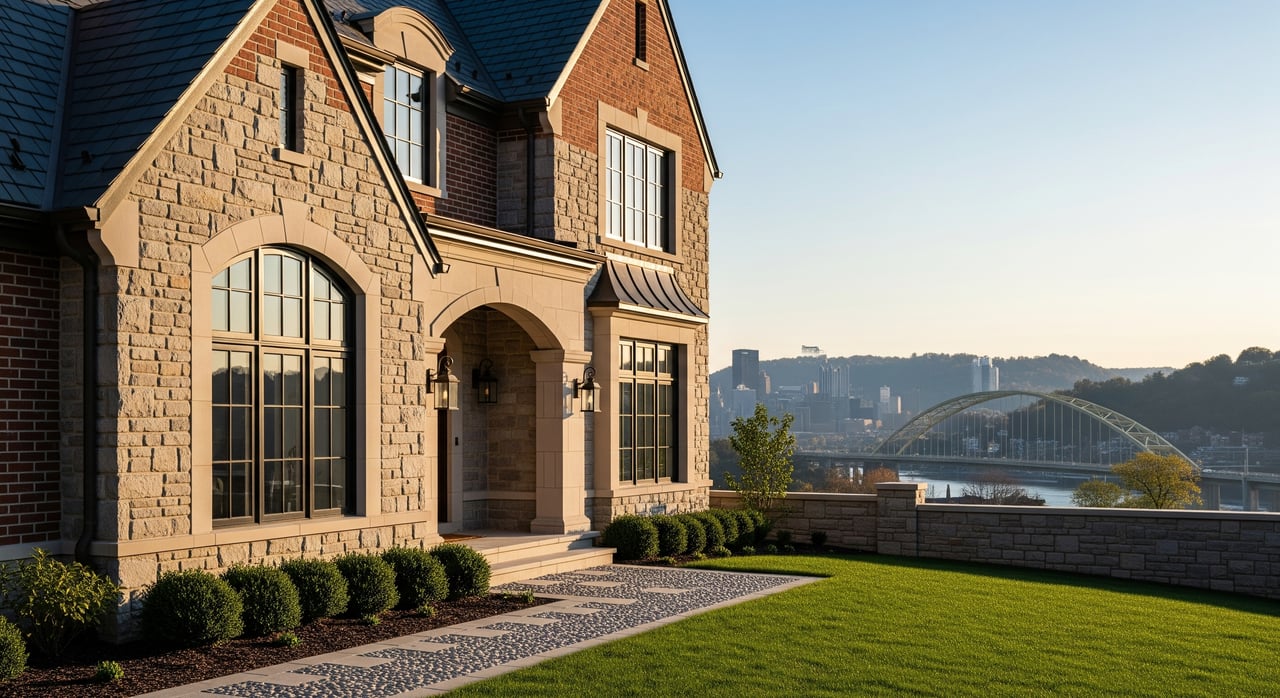
Transfer Tax in Allegheny vs Butler: Buyer Costs Explained
December 4, 2025
December 4, 2025
Buying a home around Pittsburgh? One closing cost can change just by crossing a municipal line: the realty transfer tax. Because Pennsylvania stacks state, county, and sometimes municipal pieces, the total can vary by neighborhood and even by street. If you are comparing Allegheny County and Butler County, understanding this tax helps you budget smarter and write stronger offers.
In this guide, you’ll learn how the tax works, what can change between Allegheny and Butler, simple example math, how to verify your exact rate, and how to negotiate who pays. Let’s dive in.
Pennsylvania charges a tax when title to real property is transferred. It is calculated as a percentage of the sale price and is collected at closing by your title company or settlement agent.
The total is layered. There is a state portion and often county and municipal portions. Your combined rate equals state plus county plus any municipal add-on for the property’s location.
Who pays is set by your contract. The tax is due at transfer, but the purchase agreement decides whether the buyer, the seller, or both split it. Customs can differ by market conditions, but you should always rely on what your contract says.
Some transfers are exempt. Certain intra-family transfers, transfers between spouses, and transfers to government or qualifying nonprofits may be exempt if the right paperwork is filed. Recording fees are separate from transfer tax and will also appear on your closing statement.
The difference between Allegheny County and Butler County often comes from local add-ons. Counties and municipalities can adopt their own percentages, so the combined rate can vary between a home inside Pittsburgh city limits and a home in a suburban township.
Municipal boundaries matter. Two homes with the same price can have different transfer tax totals if they sit on opposite sides of a boundary. For example, properties in Moon Township, Robinson Township, Sewickley, and other Allegheny County suburbs may have different combined rates than properties in Cranberry Township or other Butler County locations. Always verify the property’s actual municipality, not just the postal city name.
The key takeaway is simple. Your combined rate depends on the exact address and the local rules in that county and municipality. Do not assume neighboring areas have the same total.
Payment is negotiable and written into the contract. Local practice can vary by market conditions and price point.
Common patterns you may see include:
Clarity is critical. Your agreement should state the allocation, such as “seller to pay all realty transfer taxes” or “transfer taxes to be split equally.”
These examples show how the dollars change with different combined rates. They are illustrative only. Always verify the exact local percentages for your property.
A 0.5% difference adds $1,000 at $200,000 and $2,500 at $500,000. That is real money, so ask early who will pay and make sure it is spelled out in your offer.
Use this simple checklist before you submit an offer:
You can use transfer tax strategically.
A few common trouble spots are easy to prevent.
If you are weighing Moon Township, Robinson, Sewickley, Cranberry, or other western suburbs, include transfer tax and local fees in your closing cost comparison. A small percentage difference can change your cash-to-close or a seller’s net, and it can be the lever that wins your offer.
Have questions or want a property-specific estimate? Connect with the LaRocca Real Estate Team for local guidance, contract strategy, and a clear closing cost plan.
Stay up to date on the latest real estate trends.
Whether you're looking to buy, sell, or just want to chat about the exciting world of Pennsylvania real estate, let's start a conversation. Reach out to us today, and let's connect to explore the possibilities.